AI-Powered Patient Symptom Simulations for Mental Health Clinician Training
Large language models steered with Conceptors — advanced steering vectors that allow precise control over how psychiatric symptoms present — giving trainees anywhere access to a wider range of patient presentations than clinics can offer.
The Problem & Our Approach
Mental health training faces a fundamental bottleneck: trainees need diverse clinical exposure, but access to patients with rare symptom combinations and cultural variations is limited by ethics, logistics, and cost. STELLAR addresses this through controllable AI-powered patient symptom simulations.
Conceptor-Steered Patient Symptom Simulations
We use Conceptors — a mathematical framework for manipulating internal LLM representations — to create patient simulations with precisely calibrated psychiatric symptoms across anxiety, depression, psychosis, and fear spectra. Unlike prompting, Conceptors enable continuous intensity control and composability via Boolean operations.
Philadelphia Neurodevelopmental Cohort
STELLAR leverages the PNC, a community sample of ~10,000 genotyped youth with structured clinical interviews, neurocognitive assessments, and neuroimaging. The recorded clinical interviews provide both ground-truth diagnostic labels and natural language exemplars of symptom expression.
Diagnostic Tool Robustness
Controlled patient symptom simulations serve as reproducible testbeds for evaluating emerging language-based diagnostic tools before clinical deployment — measuring demographic invariance and identifying bias across sex/gender, age, ethnicity, SES, and language proficiency.
Shareability & Global Reach
Once validated, symptom-specific Conceptors can be distributed to other institutions without retraining, accelerating adoption worldwide. All outputs — Conceptor libraries, code, and evaluation frameworks — will be released under open-source licenses.
Investigators & Collaborators
A collaboration uniting machine learning, psychiatry, speech science, and lived experience across NYU, Penn, and the Linguistic Data Consortium.
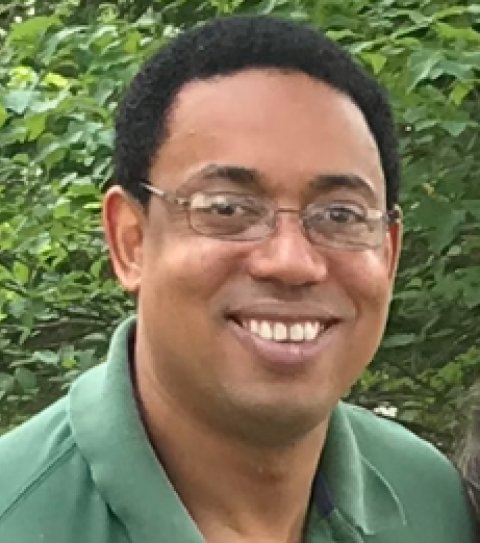 Lead PI
João Sedoc
Neville Ryant
 Local PI — Penn Medicine
Raquel Gur
 Local PI — Penn Engineering
Sharath Chandra Guntuku
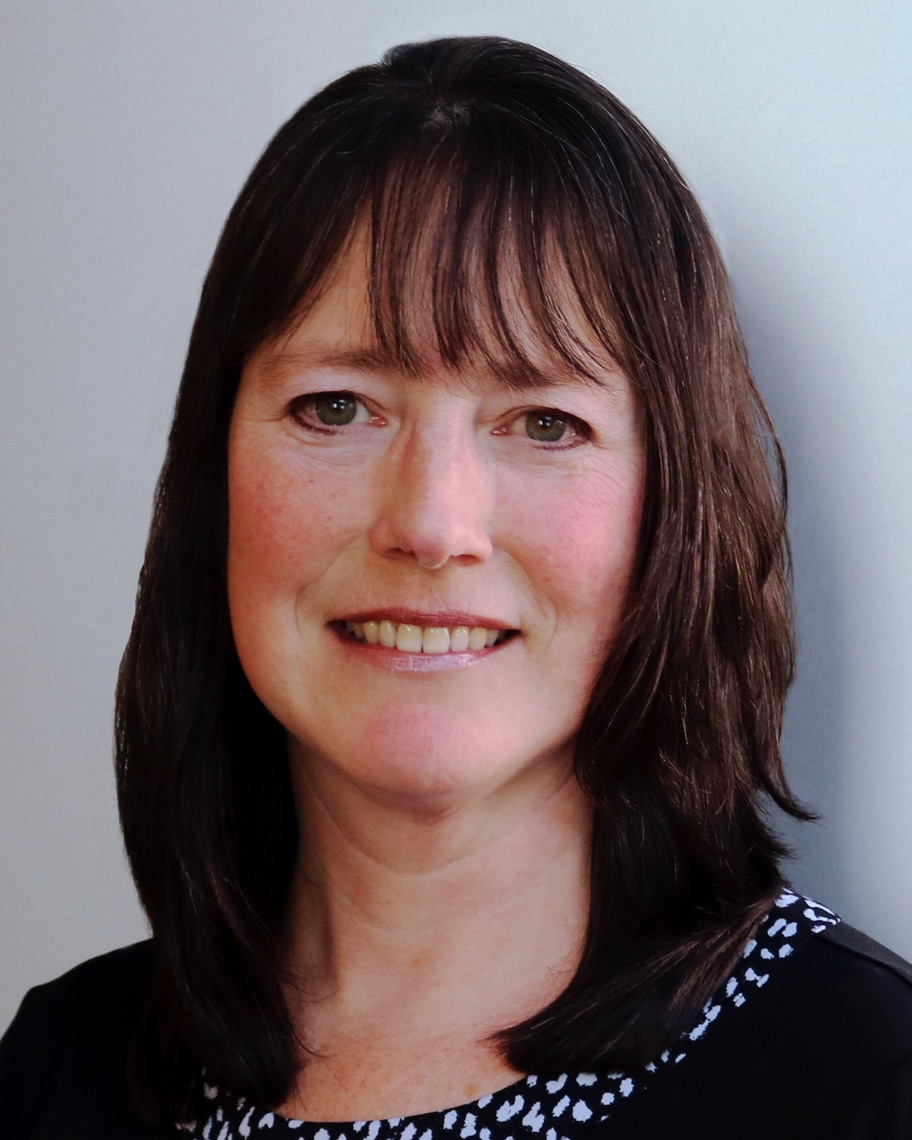 Co-PI
Co-PI
Monica Calkins
 Co-PI
Co-PI
Tyler Moore
Sunghye Cho
Rachel Gordon
Mark Liberman
 Collaborator
Ruben Gur
 Collaborator
Dominic A. Sisti
Foundational Work
Key publications by team members that underpin STELLAR's approach.
Conceptors for Semantic Steering
Unique Signatures in Verbal Fluency Task Performance in Schizophrenia and Depression
The Philadelphia Neurodevelopmental Cohort: Perspective, Lessons, and Future Directions
Large Language Models Could Change the Future of Behavioral Healthcare: A Proposal for Responsible Development and Evaluation
Key Language Markers of Depression on Social Media Depend on Race
Speech Markers of Depression Dimensions Across Cognitive Status
An Integrative Survey on Mental Health Conversational Agents to Bridge Computer Science and Medical Perspectives
Conceptor-Aided Debiasing of Large Language Models
The Third DIHARD Diarization Challenge
Natural Language Processing Methods Are Sensitive to Sub-Clinical Linguistic Differences in Schizophrenia Spectrum Disorders
Burden of Environmental Adversity Associated With Psychopathology, Maturation, and Brain Behavior Parameters in Youths
The Second DIHARD Diarization Challenge: Dataset, Task, and Baselines
The Philadelphia Neurodevelopmental Cohort: Constructing a Deep Phenotyping Collaborative
Open Positions
We're hiring across both sites. STELLAR is a two-year project spanning NLP, speech processing, clinical psychiatry, and human-centered AI. We're looking for people who are excited about building tools that make mental health training more equitable and scalable.
Postdoctoral Researcher — NLP & Steering Vectors
Develop and validate Conceptor-based steering methods for LLMs. Strong background in representation learning, mechanistic interpretability, or activation engineering. Experience with clinical NLP a plus.
Research Scientist — Speech & Multimodal AI
Work on acoustic biomarker extraction, speaker diarization, and multimodal Conceptor integration from clinical interview recordings. Experience with wav2vec, Whisper, or clinical speech analysis preferred.
Research Engineer — Platform Development
Build the patient symptom simulation training platform — integrating Conceptor-steered LLMs with avatar rendering (SoulMachines), session recording, and automated feedback systems. Full-stack experience with ML deployment.
Research Coordinator — Clinical Evaluation
Coordinate stakeholder surveys, focus groups, and the trainee-tool-trainer implementation readiness study. Experience with IRB protocols, mixed-methods research, and mental health populations.
Interested? Fill out this brief interest form with your CV and a note on what draws you to this work. We'll be in touch.